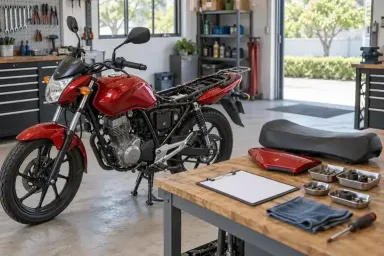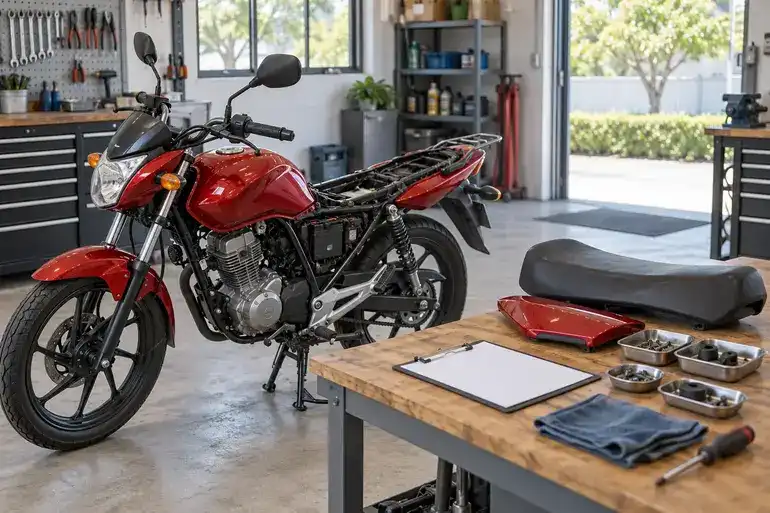
A motorcycle can be halfway through a workshop job when its owner decides to sell it. Some parts may be removed, other work may be complete, and an estimate for the next stage may still be waiting for a decision. Before arranging a buyer or collection, establish what the workshop is actually holding and what needs to happen next.
Start with a clear conversation about the current job. Ask for a record of completed work, unfinished work, loose parts and any conditions that affect moving the motorcycle. That record gives everyone a shared description of the bike instead of several different assumptions about what nearly finished means.
If you intend to explore a sale through a we buy bikes service, tell the workshop that your plans have changed before promising a collection date. The buyer's assessment and the workshop's arrangements are separate conversations. Confirm the buyer's requirements directly and explain the motorcycle's actual state without implying that a purchase or pickup has already been agreed.
Give the workshop a clear request about future work. You might be asking it to pause while you consider options, to explain the consequences of stopping at this stage, or to prepare an agreed handover. Those requests have different implications, so avoid leaving the instruction as a casual comment that you are thinking of selling.
Ask the person managing the job to acknowledge the request and identify anything that needs a separate decision. Keep the date and the wording with your job records. A clear pause instruction helps the next discussion, but it does not by itself settle charges, parts orders, collection arrangements or the motorcycle's condition.
First, identify the work that was agreed. Use the relevant estimate, job reference and any later written changes. If several versions exist, ask which one the workshop is working from. Keep the earlier versions so the sequence remains understandable.
Second, ask what has actually been completed. A proposed replacement on an estimate is different from a component that has been fitted. A diagnostic task may be complete even though the fault has not been resolved. Record those distinctions in plain language rather than copying every item into a single list of repairs done.
Third, identify work that remains proposed or unresolved. This might include a further test, a parts enquiry or an optional improvement. Ask the workshop to distinguish its findings from its recommendations and from questions it has not yet answered.
A short working record can contain:
This is an owner communication record. It should reflect the workshop's account rather than attempt to replace its technical job notes.
The condition at collection may differ from the condition at intake. Ask which assemblies are fitted, which are removed and whether the motorcycle can be moved in its present state. Do not assume that a bike which arrived under its own power can now be ridden away.
If parts have been removed for diagnosis, ask what would be involved in an agreed collection arrangement. The workshop may need to explain whether further work is required before transport can be arranged and what remains incomplete afterward. Resolve the actual scope with the people responsible for the job and movement.
Avoid giving a general instruction to put it back together without discussing what that means. Assembly for a particular transport arrangement and completion of a repair are different outcomes. Ask the workshop to explain the proposed result and any limitations in terms you can pass on accurately.
The guide to DIY maintenance and professional motorcycle repairs can help frame the boundary between an owner's planning tasks and work needing relevant skills. Use the workshop's findings and applicable instructions for the actual motorcycle. A sale deadline is not a reason to improvise technical work.
Ask for a parts list organised by status. Fitted parts, removed parts, parts ordered but not received and items you supplied yourself should not be mixed together. A component shown on an estimate may still be an enquiry rather than an item in the workshop.
For loose items, ask how they are identified and stored. A container of fasteners or an unlabelled panel can be difficult for another person to interpret later. The useful handover description is specific enough to connect each group of items to the motorcycle and the job.
Discuss what will happen to ordered or removed parts under the actual arrangements. Do not assume that every order can be cancelled, that every item will accompany the motorcycle or that any credit is automatic. Ask the workshop to explain the status and relevant terms, then keep the response with the job record.
If a part's identity or condition is uncertain, retain that uncertainty in your notes. Do not describe a loose component as serviceable, complete or compatible unless there is a sound basis for the claim. A buyer can ask further questions when the limits of your information are visible.
Once the current state is clear, ask what tasks remain between the pause request and the proposed handover. These could include completing the workshop's records, accounting for loose items, preparing the motorcycle for the agreed transport method or answering an outstanding scope question.
Keep that list separate from the original repair objective. You may be moving the motorcycle without completing the intended repair. The handover record should say so, rather than allowing a collection booking to imply that the original job is finished.
Ask who will carry out each remaining task and how completion will be confirmed. Where the answer depends on an outside provider or an unavailable part, leave the timing open until the relevant person has responded. Avoid promising a buyer that the bike will be ready on a date based only on your own preferred schedule.
For a difficult or unclear discussion, prepare specific questions in advance. The article on choosing your motorcycle mechanic provides broader context for workshop communication. Focus your own conversation on the named job, the current state and the decision you need to make.
Request a clear explanation of the actual account for the job, including completed work and any outstanding items the workshop identifies. If a line does not match your understanding, ask for clarification against the relevant estimate or instruction.
Record what remains unresolved and how the workshop proposes to address it. This article does not determine anyone's contractual rights or what a particular charge should be. If you need advice about a disputed obligation, use appropriate local assistance with the actual documents.
An account update is not a condition report. Likewise, a condition report does not settle the account. Keeping the two records distinct helps you explain the motorcycle accurately while resolving the practical arrangements around its release.
If someone else may collect the motorcycle, discuss the workshop's actual requirements for that arrangement. Do not send a person to collect it with only an informal message that they are picking up your bike. Confirm the agreed process with the workshop and the collector beforehand.
Give the transport provider the current description, including the workshop's movement limitations and any loose items to accompany the motorcycle. The provider needs information about the actual collection state rather than an old photograph taken before work began.
Confirm access and timing with both the workshop and the provider. Ask who will be present, where the motorcycle will be available and whether the loose parts have separate handling requirements. Check the provider's response before treating the booking as settled.
The site's overview of motorcycle transport options in Melbourne can help organise those enquiries. Suitability for a partly dismantled motorcycle needs direct confirmation from the people involved. Do not infer it from a general motorcycle transport service description.
Keep any workshop advice about movement or operation with the handover documents. Passing it on accurately is more useful than compressing a specific limitation into a vague description such as needs a little work.
Use the workshop update to prepare a short, current description for a prospective buyer. State why the bike went in, what work is documented as complete, what remains unfinished and what has not been established. Attribute technical findings to the relevant report rather than presenting your interpretation as a diagnosis.
The discussion of repairing a motorcycle before selling is useful context for recognising that a repair project also involves time, parts coordination and movement. Your own decision should use the actual job information and the buying conditions available to you.
Keep photographs aligned with that brief. If you only have images from before dismantling, label their timing clearly and ask for current images where appropriate. Do not let an older assembled photograph stand as the only illustration of a motorcycle now held in a different state.
Avoid declaring that a particular remaining repair will make the bike roadworthy or restore its value. A clear description can explain an unfinished job without predicting the outcome of work that has not been completed or assessed.
Consider an owner whose commuter motorcycle is at a workshop for a starting problem. A diagnostic stage is complete, a further repair has been proposed and several components remain removed. The owner decides to explore selling and initially asks for the bike to be ready on Friday.
A clearer request asks the workshop to pause further proposed work, explain the present physical state and identify what is needed for an agreed transport handover. The owner requests a separate list of completed work, unresolved findings and loose parts, then confirms collection with a suitable provider.
The buyer brief now describes the unfinished state and includes the available workshop record. It does not claim that the starting problem is fixed or that the motorcycle can be ridden away. The example has no assumed price or guaranteed sale outcome; the improvement is the quality of the information and arrangements.
A paused repair is easier to manage when the next step is explicit. Keep the work record, current condition, loose parts, account questions and collection arrangements clear enough that each person knows what has been agreed.
Before handover, compare the final motorcycle and accompanying items with that record. Explain any changes while there is still time to resolve them. A sale can then begin from an honest account of the unfinished job rather than an assumption that stopping work means everything else is complete.